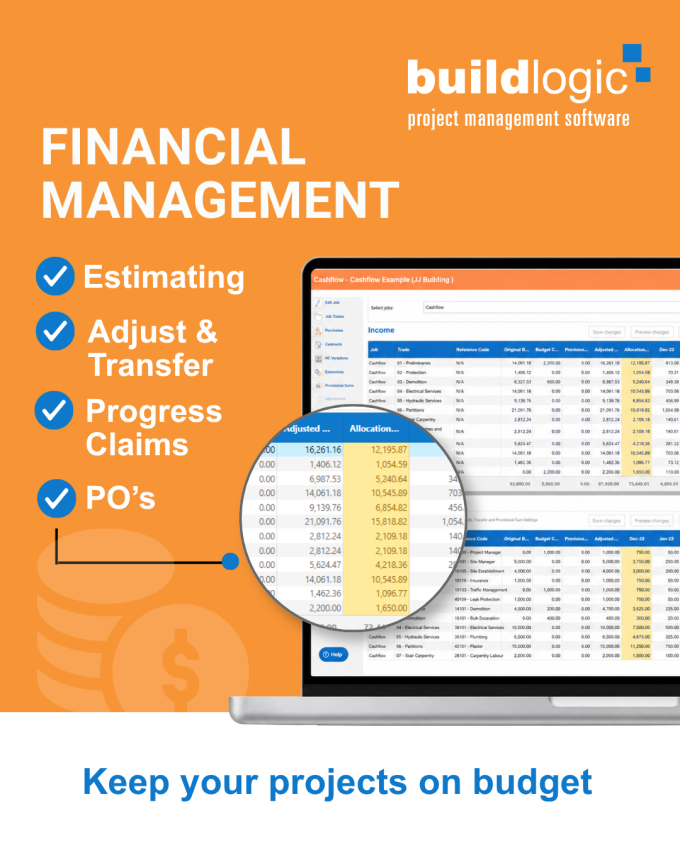
Construction Financial Management: How to Keep Your Projects on Budget
In construction, profitability isn’t determined by how much work you win. It’s determined by how well you manage the financial performance of every project.
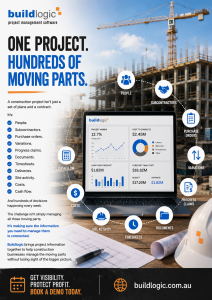
Material prices change. Labour costs increase. Subcontractor claims arrive. Variations occur. Purchase orders are raised, and payments don’t always arrive when expected.
For Australian builders, managing these moving parts while keeping projects on budget can be challenging.
The problem is that financial issues don’t always become obvious immediately. By the time a cost overrun appears in your month-end reporting, your project margin may already be under pressure.
That’s why effective construction financial management requires more than accurate estimating. It requires ongoing visibility across project budgets, actual costs, committed expenses, progress claims and cash flow.
With the right construction financial management software, builders can move beyond simply recording costs to understanding where their projects stand financially — and where they’re heading.
Why Construction Financial Management Matters
Every construction project starts with a budget. However, that budget is only as useful as the information used to manage it throughout the project.
As work progresses, your financial position changes.
- Suppliers deliver materials and submit invoices.
- Subcontractors complete work and lodge claims.
- Labour hours accumulate.
- Variations affect project costs and income.
- Purchase orders create future financial commitments.
- Delays can increase overheads and affect cash flow.
Without connected financial information, it becomes difficult to understand the full cost of delivering a project.
A project might appear profitable based on invoices received, but what about purchase orders that haven’t yet been invoiced? Or subcontractor costs that are committed but not yet claimed?
Knowing what you’ve spent is important. Knowing what you’re committed to spending is just as critical.
Construction financial management software helps bring these figures together so builders can make decisions based on a more complete financial picture.
1. Start with Accurate Estimating and Budget Management
Every profitable construction project begins with a well-prepared estimate.
However, estimating shouldn’t be a standalone process that ends once the contract is awarded.
Your estimate provides the financial foundation for the entire project. It establishes the expected costs of labour, materials, subcontractors, plant and equipment, and other project expenses.
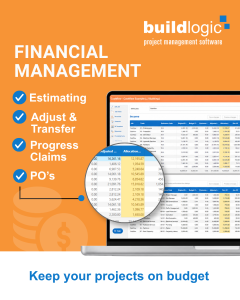
Buildlogic’s estimating and budget management capabilities help builders organise their project costs and establish budgets that can be monitored throughout construction.
This creates a clearer connection between what you originally planned to spend and what the project is actually costing.
Why this matters
When estimating and project financial management are connected, builders can:
- Establish more consistent project budgets.
- Compare budgeted costs against actual expenditure.
- Identify cost variations as projects progress.
- Improve visibility over individual trades and cost categories.
- Use project financial information to support future estimating decisions.
A good estimate wins the job. Good budget management helps protect the margin.
2. Manage Budget Adjustments as Projects Change
Few construction projects proceed exactly as originally planned.
Design changes, scope adjustments, unexpected site conditions and supplier price increases can all affect the original budget.
The challenge is ensuring these changes are reflected in your financial information.
If budget adjustments are managed separately through spreadsheets, emails or manual calculations, the risk of inconsistent information increases.
Buildlogic provides Adjust & Transfer functionality to help manage changes within project budgets.
This allows construction teams to maintain clearer financial records as project requirements evolve.
The benefit of better budget control
Rather than relying on the original estimate throughout the entire project, builders can maintain a more current understanding of their financial position.
This helps project managers and financial teams assess how changes affect individual cost categories and the overall project budget.
The objective isn’t simply to record what has changed.
It’s to understand the financial impact of those changes before they affect the project’s profitability.
3. Keep Progress Claims Connected to Project Financials
Cash flow is one of the most important considerations for any construction business.
Even a profitable project can create financial pressure when payments are delayed or income doesn’t align with outgoing expenses.
Progress claims play a significant role in managing project income.
However, when claims are managed separately from project budgets and financial reporting, it can become harder to understand the relationship between work completed, amounts claimed and costs incurred.
Buildlogic’s Progress Claims functionality helps builders manage claims as part of their broader project management process.
By keeping project claims and financial information connected, construction businesses can improve visibility over project income and payment activity.
Why progress claim management matters
Effective progress claim management helps builders:
- Keep project claims organised.
- Maintain clearer records of amounts claimed.
- Improve visibility over expected project income.
- Support financial reporting and cash flow planning.
- Reduce reliance on disconnected administrative processes.
For builders managing multiple projects, this visibility becomes increasingly valuable.
Because getting the work done is only part of the equation. Getting paid and managing when money comes in matters too.
4. Track Purchase Orders and Committed Costs
One of the biggest risks in construction financial management is relying solely on costs that have already been invoiced or paid.
Consider a builder who has raised purchase orders for materials and subcontractor services.
Those expenses may not yet appear in the accounts as actual costs. However, the business has already made financial commitments.
If these commitments aren’t considered, the project may appear to have more available budget than it actually does.
Buildlogic’s Purchase Order functionality helps builders manage purchasing activity and improve visibility over committed project expenditure.
When combined with actual costs and project budgets, this provides a more complete picture of the project’s financial position.
Budget vs Actual vs Committed Costs
Understanding these three figures is fundamental to effective construction budget management.
Budget: What you planned to spend.
Actual Costs: What has already been recorded as expenditure.
Committed Costs: Costs associated with purchases or obligations that may not yet have been fully invoiced.
By considering actual and committed costs together, builders can identify potential budget pressure earlier.
This is particularly important when managing multiple suppliers, subcontractors and project stages.
5. Look Beyond Today’s Costs with Cash Flow Forecasting
Knowing what a project has cost so far is essential.
But knowing what it is likely to cost to complete is equally important.
Construction projects operate in a constantly changing environment. Costs fluctuate, work progresses, claims are submitted and project timelines shift.
This makes financial forecasting an important part of construction project management.
Buildlogic’s Cash Flow and Forecasting capabilities help builders assess project income, expenses and future financial requirements.
Rather than waiting until month end to review historical figures, builders can use current project information to make more informed decisions as work progresses.
Better forecasting supports better decisions
With improved financial visibility, construction businesses can:
- Monitor anticipated project income and expenses.
- Review actual and committed costs.
- Assess future project expenditure.
- Understand remaining funds.
- Identify potential pressure on project margins.
- Make more informed purchasing and operational decisions.
The goal is to move from reactive financial management to a more proactive approach.
Don’t just track what your projects have cost. Understand what they’re likely to cost to finish.
6. Bring Construction Financial Management into One Platform
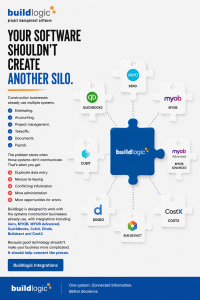
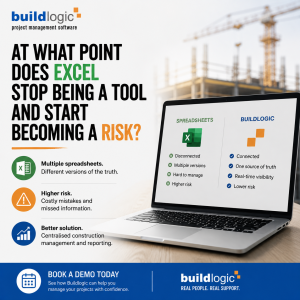
Many construction businesses still rely on a combination of spreadsheets, accounting software, emails and separate project management systems.
Each may serve a purpose, but disconnected information can create additional administration and make financial reporting more difficult.
Project managers need access to budgets and commitments.
Estimators need reliable cost information.
Accounts teams need accurate financial records.
Directors need visibility over profitability and cash flow.
When information is spread across multiple systems, maintaining a consistent view becomes challenging.
Buildlogic is designed to connect these processes within one construction management platform.
Its financial management capabilities work alongside estimating, project management, contractor management, document management and site operations.
Buildlogic also integrates with popular accounting platforms, including Xero, MYOB and QuickBooks, helping construction businesses connect project and accounting workflows without necessarily replacing their existing accounting software.
The result?
Less double handling, more consistent project information and greater visibility across the business.
For growing construction companies, this can make a meaningful difference to the way projects are managed and financial decisions are made.
7. Better Financial Visibility Helps Protect Project Margins
Construction businesses can’t control every factor affecting project costs.
They can’t always prevent supplier price increases, unexpected site conditions, payment delays or changes to project scope.
But they can improve how quickly they identify the financial impact.
That’s where connected construction financial management software becomes valuable.
When builders can see budgets, actual costs, commitments, claims and forecasts together, they are better positioned to:
- Recognise potential cost overruns.
- Review the financial impact of variations.
- Manage purchasing decisions.
- Plan for upcoming expenses.
- Monitor project cash flow.
- Protect margins through more informed decisions.
Financial management isn’t simply an accounting function.
It’s a core part of delivering successful construction projects.
Why Australian Builders Choose Buildlogic
Buildlogic is Australian-designed construction project management software developed for the practical needs of the building and construction industry.
It brings together essential project and financial management functions to help builders manage their businesses with greater visibility and control.
From estimating and budget management through to purchase orders, progress claims, forecasting and reporting, Buildlogic supports the financial processes that matter throughout a project’s lifecycle.
And with real Australian training and support, construction teams have access to people who understand the industry and the challenges they face.
Frequently Asked Questions
What is construction financial management software?
Construction financial management software helps builders manage project budgets, costs, purchasing, claims, cash flow and financial reporting. It provides a more connected view of project financial performance throughout construction.
How can builders prevent construction budget blowouts?
Builders can reduce the risk of budget overruns by preparing accurate estimates, monitoring actual and committed costs, managing budget adjustments, reviewing progress claims and regularly updating financial forecasts.
What is the difference between actual and committed costs in construction?
Actual costs are expenses already recorded against a project. Committed costs represent financial obligations, such as purchase orders, that may not yet have been fully invoiced. Monitoring both provides a more complete understanding of project expenditure.
Why is cash flow forecasting important for construction companies?
Cash flow forecasting helps construction businesses anticipate future income and expenses. This supports planning for supplier payments, subcontractor claims, labour costs and other financial commitments.
Can Buildlogic integrate with existing accounting software?
Yes. Buildlogic integrates with Xero, MYOB and QuickBooks, helping construction businesses connect their project management and accounting processes.
Is Buildlogic suitable for Australian residential and commercial builders?
Yes. Buildlogic supports residential and commercial construction businesses, with project management, financial management and optional modules that can be configured around different operational requirements.
Keep Your Projects on Budget with Buildlogic
In today’s construction environment, knowing your numbers isn’t optional.
From the first estimate to the final claim, every financial decision can affect your project’s profitability.
Buildlogic helps Australian builders bring their project financial information together, improve cost visibility and make more informed decisions throughout construction.
Know your budget. Know your costs. Know your commitments. Know where your projects stand.
See Buildlogic in Action
Discover how Buildlogic can help you manage estimating, project budgets, purchasing, progress claims, cash flow and financial reporting.
Book a personalised demonstration:
https://www.buildlogic.com.au/book-a-demo/
Start your 14-day free trial:
https://www.buildlogic.com.au/free-trial/
Buildlogic is the logical choice.
Australian-designed construction management software. Real Australian support.