Your Software Shouldn’t Create Another Silo
Construction businesses have never had more technology available to help manage their operations.
Estimating software. Accounting platforms. Takeoff tools. Payroll systems. Document management. Project management. Mobile applications. Reporting tools.
Each can solve a particular problem.
But there is another problem construction businesses increasingly need to consider:
What happens when all that technology doesn’t communicate?
Adding more software doesn’t necessarily create a more efficient business. If every platform operates independently, technology can create additional administration, duplicate information and another silo for your team to manage.
That’s why integration is becoming an increasingly important part of construction technology.
The Problem Isn’t Having Multiple Systems
Construction is complex, and expecting one piece of software to perform every specialist function isn’t always practical.
An estimator may have a preferred estimating or takeoff platform. The finance team may use Xero, MYOB or QuickBooks. Project managers need detailed operational information, while site teams need practical tools they can access in the field.
Using specialist systems isn’t necessarily the problem.
The problem starts when information can’t move effectively between them.
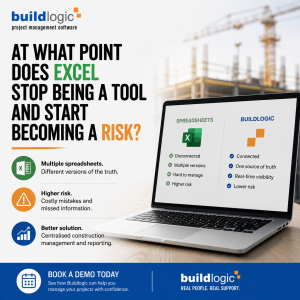
When systems aren’t connected, people become the integration.
Someone exports a spreadsheet.
Someone re-enters the information.
Someone emails a new version.
Someone updates one system but forgets another.
Someone then has to reconcile the differences.
Instead of technology reducing administration, the business can end up creating additional work simply to keep its systems aligned.
The Cost of Disconnected Construction Software
Disconnected systems can create problems that aren’t immediately obvious.
Duplicate Data Entry
Entering the same information into multiple systems takes time and creates additional opportunities for mistakes.
Manual Re-keying
Moving figures manually from estimating or project management systems into accounting software introduces another administrative step—and another potential point of error.
Conflicting Information
When information exists in several places, determining which figure or document is current can become difficult.
Project management may have one number. Accounts may have another. Management may be working from a spreadsheet that was exported last week.
More Administration
Every manual process requires someone’s time.
Across multiple projects, repeated exporting, entering, checking and reconciling information can add up to a considerable administrative workload.
Reduced Visibility
Perhaps most importantly, disconnected information makes it harder to understand what’s happening across the business.
If project, cost and financial information exists in different systems, obtaining a complete picture can take longer than it should.
Construction Technology Should Connect the Pieces
A better technology strategy isn’t necessarily about replacing every piece of software your business already uses.
It’s about determining how those systems fit together.
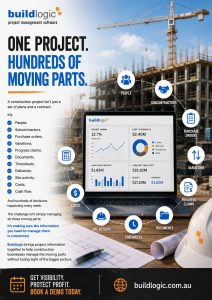
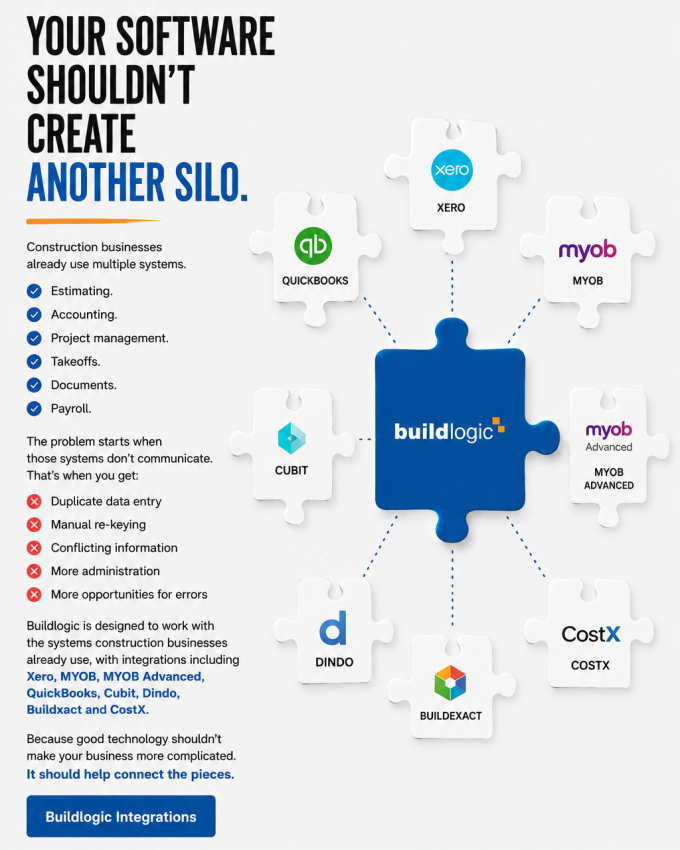
Buildlogic is designed to sit at the centre of construction project management, connecting key project and operational information while supporting integration with other systems used across the business.
This enables construction companies to retain specialist tools where appropriate while creating a more connected flow of information.
Buildlogic Accounting Integrations
Financial information is one of the most important areas to connect with project management.
Buildlogic supports accounting integrations including:
Xero
Connect project management and accounting workflows to reduce unnecessary duplication between operational and financial systems.
MYOB and MYOB Advanced
Buildlogic supports integration with MYOB environments, helping connect construction project information with financial management processes.
QuickBooks Online
Integration with QuickBooks Online provides another option for businesses wanting to connect their construction and accounting workflows.
The objective isn’t simply integration for integration’s sake.
It’s to reduce manual processes and improve the flow of relevant information between the people managing projects and those managing the financial side of the business.
Estimating and Takeoff Integration
Estimating is another critical part of the construction information lifecycle.
A considerable amount of work goes into creating an estimate before a project begins. Re-entering that information manually once a project moves into delivery creates unnecessary work.
Buildlogic supports workflows and integrations with estimating and takeoff solutions including Cubit, Dindo, Buildxact and CostX, helping construction businesses move relevant information into their project management processes.
This creates a more connected journey from estimating through to project delivery, cost management and reporting.
From Estimate to Project to Accounts
This is where the value of integration becomes clearer.
Consider how information moves through a construction business.
An estimate helps establish the original project budget.
That budget informs purchasing and subcontractor commitments.
Those commitments influence project costs.
Actual costs affect forecasting.
Variations change project financials.
Progress claims influence revenue and cash flow.
Financial information ultimately flows through to accounting.
These aren’t isolated processes.
They’re different stages of the same project.
When the systems supporting those stages are better connected, teams can spend less time moving information and more time using it.
Integration Supports Better Project Visibility
The ultimate objective isn’t simply reducing data entry.
It’s visibility.
Construction businesses need to understand:
What was budgeted?
What has been committed?
What has been spent?
What has changed?
What remains to be spent?
Where is the project heading?
What does that mean for cash flow and profitability?
Connecting project information makes it easier to build that bigger picture.
This becomes increasingly important as a construction business grows and the number of projects, transactions, subcontractors and employees increases.
Your Technology Stack Should Work Together
There’s no reason construction businesses should abandon every system that already works for them simply because they implement construction management software.
The better question is whether those systems can form part of a connected technology ecosystem.
Buildlogic provides a central construction management platform while integrating with key accounting, estimating and other software used by Australian construction businesses.
The goal is straightforward:
Reduce duplication. Improve information flow. Increase visibility.
Because good technology shouldn’t create another silo.
It should help connect the pieces.
Discover Buildlogic Integrations
Already using Xero, MYOB, QuickBooks Online, Cubit, Dindo, Buildxact or CostX?
See how Buildlogic can fit into your existing technology environment and help bring your construction project information together.